Before any detailed design work begins, before a single paint colour is chosen or a piece of furniture is sourced, an interior designer will create a mood board.
It may look like a pretty collage, but it’s one of the most important steps in the whole process.
So, what exactly is a mood board?
A mood board is a visual collection of inspirational images, colours, materials, textures and fabrics that captures the look, feel and direction of a space. Think of it as the design’s first draft: a way of seeing and feeling the idea before any time is spent on the detail, or money is spent making it real.
Why does it matter so much?
It gets everyone on the same page. Words like “cosy”, “modern” or “relaxed” mean different things to different people. A mood board removes the guesswork, so the designer and client are looking at the same vision.
It helps you work out what you like. Many clients struggle to describe their taste. Reacting to images (yes, I like this one, that one no) is often much easier that answering questions in the abstract.
It saves time and money. Spotting that something isn’t quite right at mood board stage (usually within what designers call concept development stage) is far easier, and cheaper, than discovering it after the sofa has arrived or the paint is on the walls.
It keeps the whole project cohesive. Every later decision, from flooring to lighting to cushions, will be checked against the board. It’s what makes a room feel considered rather than put together piece by piece.
Types of mood board
Conceptual mood board. This focuses on the vibe of the space, using more generic imagery to explore and describe the mood, atmosphere and style. It’s usually one of the first steps and the one where you decide the overall direction. A quick note - this mood board may actually contain no images related to interiors or the home, and sometimes clients may have a hard time understanding what it’s trying to convey as it can be quite abstract.
Inspiration mood board. Here is where you will find interior images being used that will inspire the overall look and feel. It can be easier for clients to understand these boards as it is much more related to the home.
Materials board. Once the direction is agreed, this board shows the types of materials proposed for the space: think wood colour, metal colour and finish, paint finish. Usually this is presented as a digital board.
Samples board. This shows digital and/or physical samples of the fabric, finishes and paint colours, so you can see and touch how they work together in real life before anything is ordered.
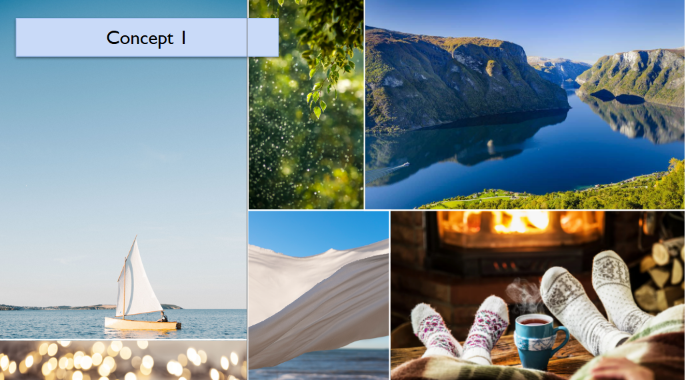
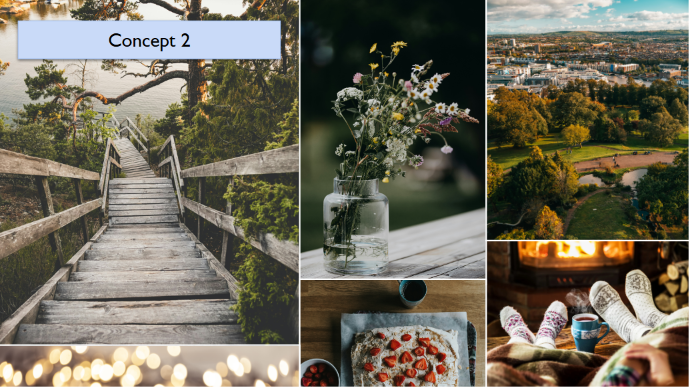
A look at two conceptual mood boards in action.
Below are two conceptual mood boards I created for a client. Both are grounded in nature, but notice the subtle differences between them. One feels more energetic, light and airy. The other has a greater sense of calm and peacefulness.
Same starting point, two quite different feelings. I wonder which you prefer?
Want to try this yourself?
You don’t need to be a designer to start. Create a Pinterest board or collect pages or photos from magazines and books. Save anything that catches your eye without overthinking it. After a week or two, look for patterns: recurring colours, textures, materials etc. Those patterns are the beginnings of your own mood board, and a great starting point for any conversation about your home. Happy mood boarding!
*Image sources: Freepik and Unsplash. Links available on request.
Are you considering a design project in Surrey, South West London or the surrounding areas?
If you are planning a project and would like to explore working together, you can learn more on my Services page,or get in touch at hello@roxanarahamandesign.co.uk